
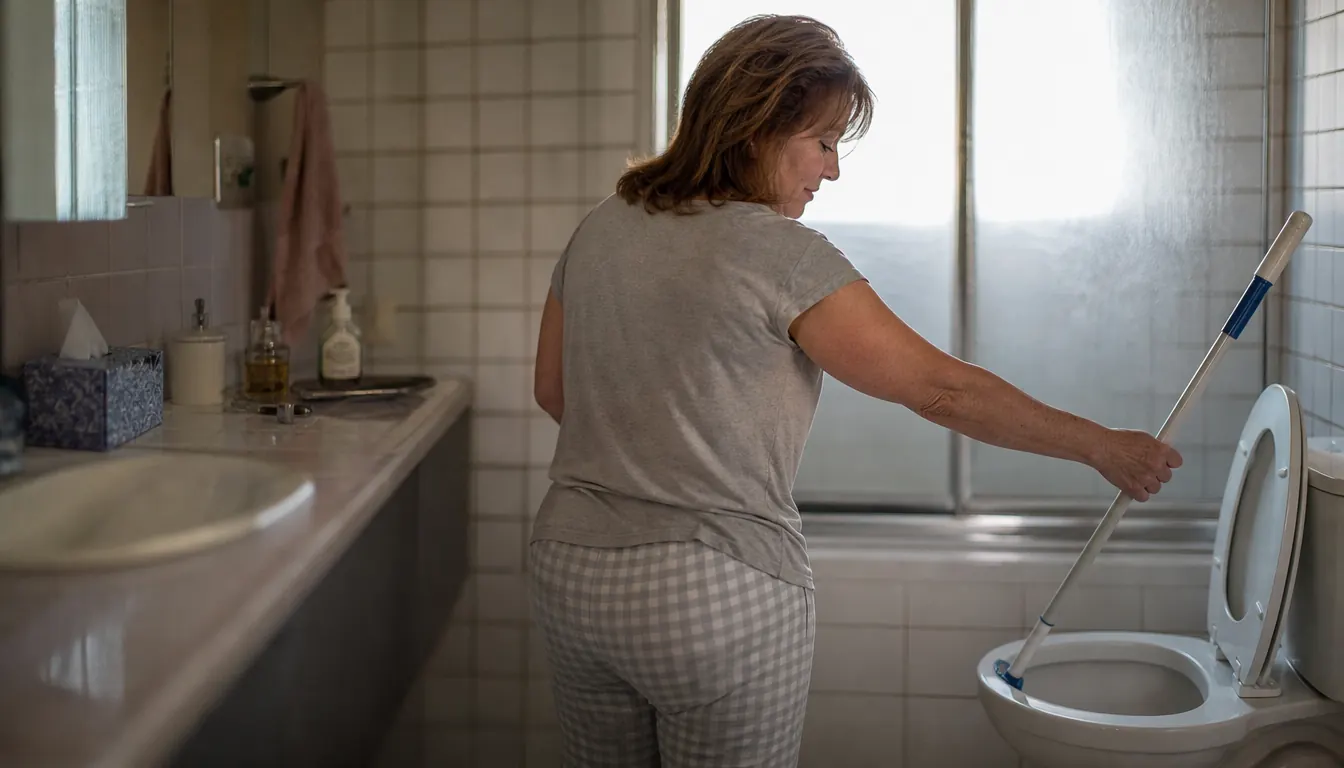
The hall bathroom in our house is small, windowless, and shared by three people every day. My husband Ray works shifts and shaves in there most mornings, my son Marcus is sixteen and in and out of it constantly, and I am the one who cleans it. For years the job was not the problem. The tool was. I kept a plastic brush in a holder on the floor, and every time I lifted it out it dripped something I did not want to look at, and the bottom of the holder collected a gray ring I then had to scrub. I was cleaning the toilet and then cleaning the thing I cleaned the toilet with. For a while I tried to solve that by rinsing the brush in the bowl and setting it right back, which only meant the holder got dirtier faster. Then I tried keeping the brush standing in a bleach solution, and by fall the plastic had gone chalky and the bristles had splayed out flat. Both times I ended up where I started, with a wet thing on the floor and a smell I could not place until I picked it up. The Clorox ToiletWand kit is the first thing that stopped that loop.
Here is what comes in the box: one wand with a long handle, six original disposable scrubbing pads, and ten more pads in what Clorox calls the rainforest rush scent. Sixteen refill heads in total. The pads arrive preloaded with cleaner, so there is no bottle to squirt and nothing to measure, and the kit is bleach free. Clorox lists the pads as killing 99.9% of germs and says the cleaner lifts hard water and lime stains about twice as fast as a brush used with a manual bowl cleaner. We have hard water here, the kind that leaves a chalky line at the water line within a week of a good scrub. That second claim is the one I tested hardest.
What surprised me is how much of the dread was about the tool and not the work. Once the pad comes out of the tub already wet and goes in the trash already used, the job shrinks to about ten minutes of actual movement. That is the whole case for this kit, and it is why it earned a spot on the reorder list taped to the fridge instead of going under the sink with the things I tried once.
Sixteen pads, one long handle, and no brush sitting in gray water
The starter kit ships with one wand, six original pads and ten rainforest rush pads, all preloaded with cleaner. The head goes in the trash when you finish and your hands stay out of the bowl.
Amazon Check Today's Price on Amazon →The Five-Step Clean I Do Every Week
Step 1: Load a pad before you kneel down
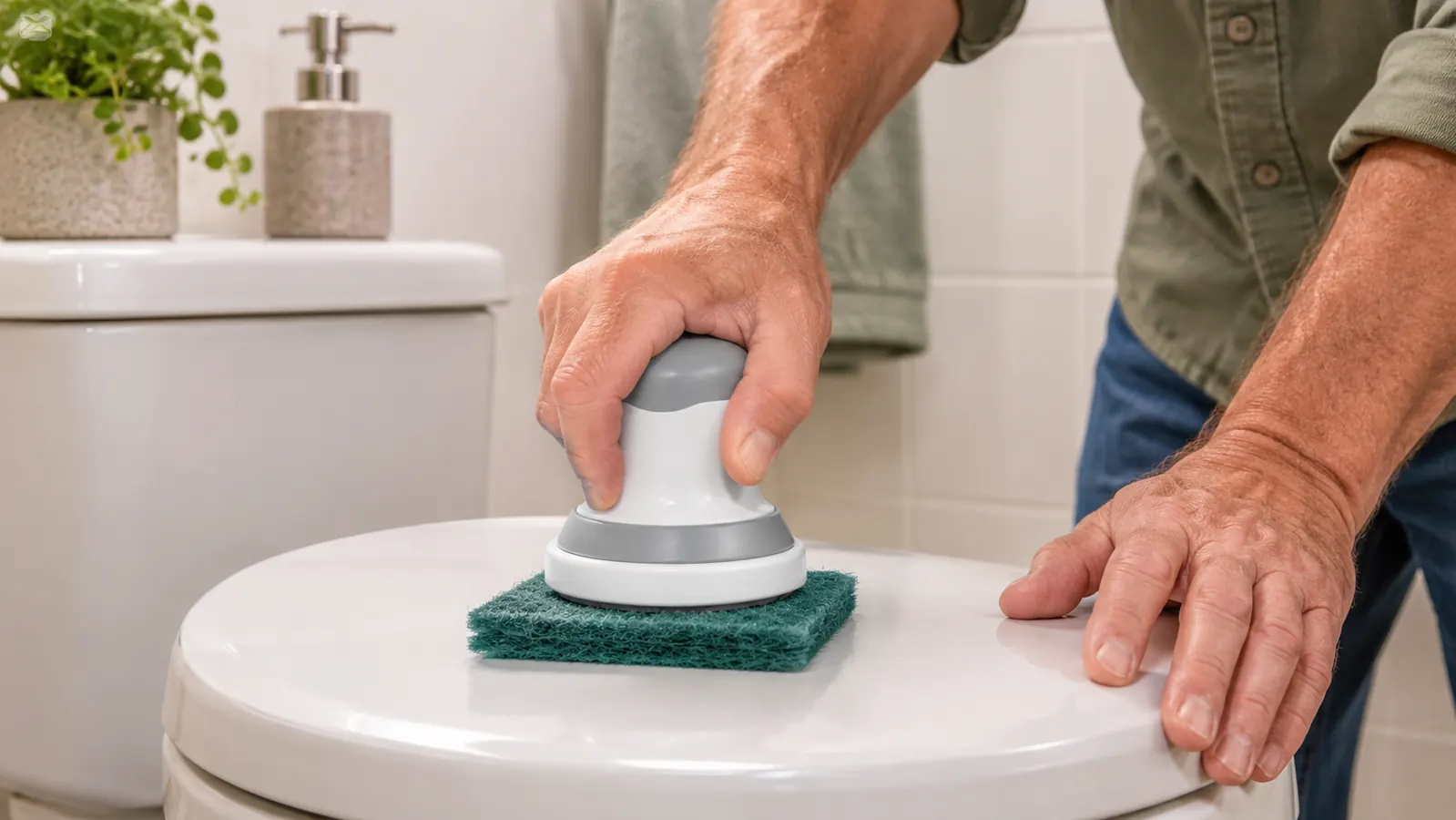
The wand and the refill tub live on the shelf above the toilet, and I pull one pad out and set it on the closed lid before I start anything else. You press the head of the wand straight down onto the pad and lift, and the pad grips and comes up with it. That is the entire assembly, and it takes about two seconds. The old routine was a bottle, a brush, gloves I never actually wore, and a bucket I never actually needed.
One note from experience: press the pad on squarely. If you catch an edge, the pad hangs off the head at an angle and flips the first time you put it in the bowl. I did that twice in the first week. Now I set the pad on the lid, line the head up, and push straight down, and it has not happened since. Two seconds of care beats wiping the floor.
Step 2: Start under the rim, not in the water
The underside of the rim is where a brush is at its worst. You cannot see up there without bending over the bowl, and a brush mostly pushes the same dirty water around the same circle. The long handle lets me work from a distance instead of crouching with my face above the water, and I can get the pad up under the lip, which is more than I could say for the brush. I run it the whole way around, then go back over the front section where the seat hinges sit, because that is where the spray lands.
The order matters more than it sounds. If you start in the water, you are dragging a wet pad up a dry wall and it streaks. Start high, work down, and every pass moves dirt toward the water instead of back up the porcelain. I learned that the hard way our first January in this house. I went in low, scrubbed the water line first, then reached up under the rim with a pad already heavy with bowl water, and I dragged a gray streak down the front of the bowl that took two more passes to get off. High to low, clean to dirty, is the whole rule.
Step 3: Work the water line and give it half a minute
The hard water ring is the real test, and it is the reason I stopped buying liquid bowl cleaner. I set the pad on the ring at the water line and hold it there for about thirty seconds before I scrub. Clorox claims the pads lift hard water and lime stains about twice as fast as a brush and manual cleaner, and in my bathroom that holds. The ring comes off in a couple of passes instead of the five or six minutes of grinding I used to do, and I am not pressing hard enough to feel it in my shoulder the next day.
I timed it once out of curiosity, on a Saturday. The ring in the hall bathroom had gone about ten days. Thirty seconds of contact and four short scrubs and it was gone. The same ring with my old brush and a liquid cleaner used to cost me six or seven minutes and a sore wrist, and I would still find a shadow of it when the porcelain dried. That single difference is what moved this kit onto the fridge list. If the bowl has gone longer than you want to admit, do the ring, come back the next day, and do it again with a fresh pad. Two short passes a day apart beat one long session where you get tempted to scrape the porcelain with something metal. Do not do that. A scratched bowl holds stain better than a smooth one, and then you are stuck with it.
The part I did not expect was the end of the job. There is no wet brush going back into a holder to sit there until next week. The pad drops in the trash and the job is actually over.
Step 4: Do the outside while the bowl airs
While the inside is still wet, I take the same pad around the outside of the bowl: the outer edge of the rim, the base, the flat spot behind the seat hinges, and the bolts at the floor. This is the part I skipped for years and it is the part that matters most in a house where two men use one bathroom. The outside of the toilet and the floor right around it is where the smell lives, not the bowl.
The wand makes this easier because you are not trying to hold a dripping brush and a bottle at the same time. One hand on the handle, one hand steadying the seat out of the way, and the pad does both jobs without either one fighting you. I keep the pad off the painted wall and off the counter. Clorox lists the recommended surface as porcelain, which is what the bowl and the tank are.
The seat and lid get a separate disinfecting wipe, not the pad. Different surface, different tool, and it takes four seconds.
Step 5: Drop the pad and get out
This is the step that sold me on the whole system. I hold the wand over the trash bag, release the pad, and it drops in. My hands never touch the wet end. The old brush went back into a holder to sit in its own water until the next time, and I could smell it walking into the bathroom two days later. There is nothing to store wet and nothing to clean afterward. I wipe the handle with a disinfecting wipe, put the wand back on the shelf, and the bathroom is done.
The whole job takes me under ten minutes now, including the outside and the floor around the base. It used to take twenty, most of it scrubbing and the rest of it pretending the brush was clean enough to put back.
What Else Helps
Run the exhaust fan before you start and leave it on for a few minutes after. A windowless bathroom holds moisture, and a bowl that stays damp grows the ring back faster than one that dries out. Our fan is loud and I used to skip it. I do not skip it anymore. The mirror over the sink is my tell. If it is still fogged when I come back upstairs twenty minutes later, I run the fan longer next time, because that same trapped moisture is what feeds the water line.
Keep the refills where you can see them. I put the tub on the shelf next to the wand, not under the sink behind the extra toilet paper, because the entire system falls apart if you open the tub and it is empty. The wand itself is a long one, and the kit box measures about 16.8 inches tall and 4.75 inches wide, so measure your shelf before you assume it will fit. Ours did not fit standing up behind the paper. It lives flat on the shelf above the toilet now, with the head just over the edge so a used pad can drop straight into the trash without me carrying it anywhere. When I get down to about four pads it goes on the list on the fridge, and it gets reordered with the rest of the household basics.
On frequency: I do the full five steps twice a week, plus a single-pad pass on the days in between when the bathroom has had a lot of traffic. Sixteen pads lasts me a little over three weeks at that pace, and I reorder before I run out. That rhythm is the reason the bathroom stopped being a weekend project.
Give the floor and the baseboards a pass with a separate cloth while you are already in there. The wand is for the toilet, and Clorox lists the recommended surface as porcelain. Using a pad on the tile is a waste of a pad and it does not clean tile well anyway. One disinfecting wipe around the base and the floor bolts, then the trash, then wash your hands.
And do not leave a used pad on the head for the next day. It is disposable for a reason. If the bowl needs a second pass, load a second pad.
What the Wand Does Not Do
It is not a plumbing tool. It will not clear a clog, and it is not meant for anything except a toilet. I have seen people try one on a shower door and a sink basin, and the pad is not built for a flat surface. Keep it in the bathroom, use it on the bowl and the outside of the bowl, and it will do its job.
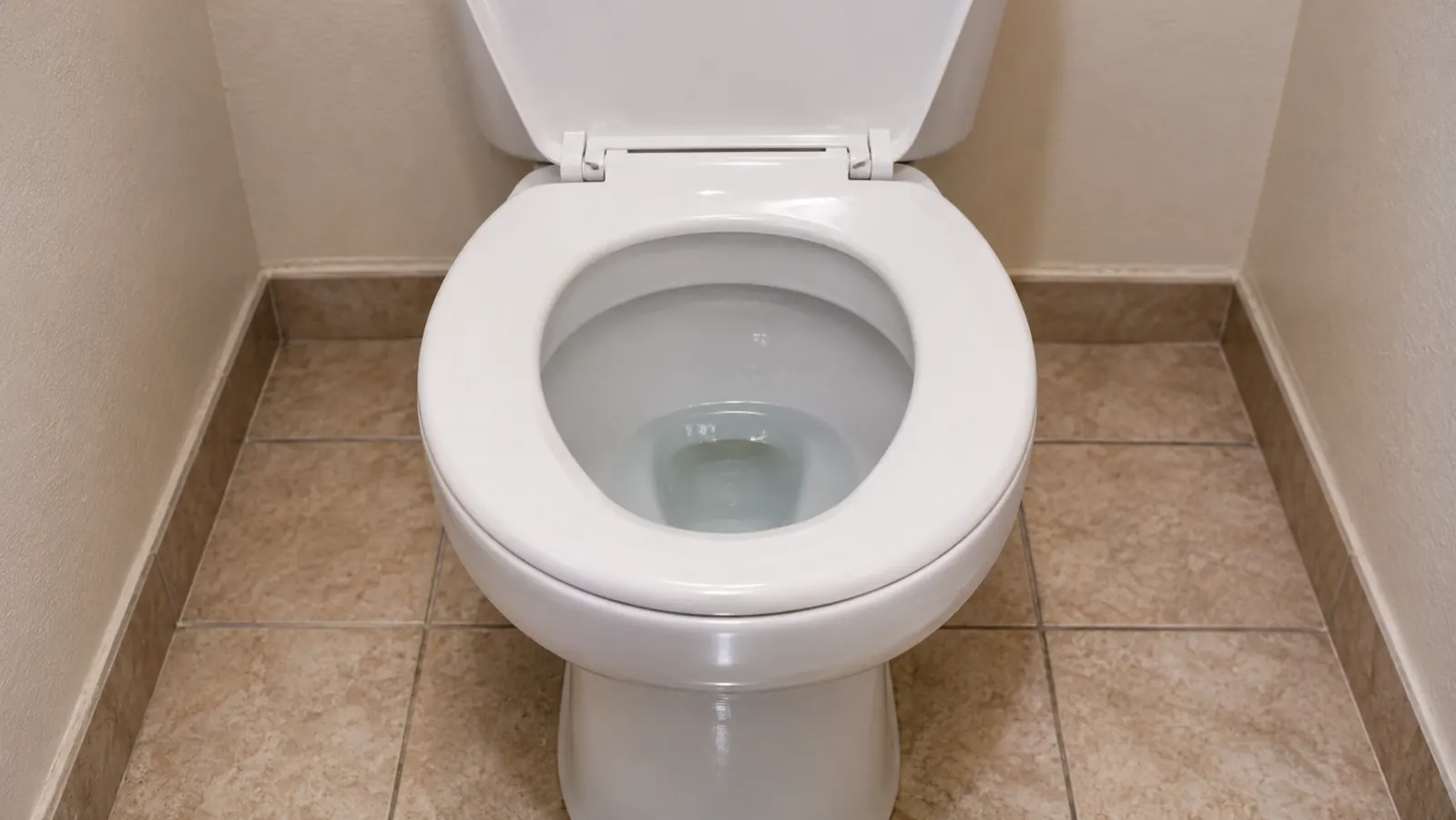
It also will not fix a stain that has been in the porcelain for years. If the ring is etched in, no pad is lifting it, and you are looking at a gentle pumice stone or a new bowl. Ours was not that far gone. Two passes with the wand and the ring I had been fighting since spring came off, which is the honest version of the before and after.
Ten minutes, one pad, and nothing left sitting in the holder
If the part you dread is the brush, this is the fix. One wand, sixteen preloaded pads, bleach free, and a disposal step that does not involve your hands.
Amazon Check Today's Price on Amazon →