

I kept the same toilet brush behind the hall bathroom door for eleven years. Not because it was a good brush. Because replacing it meant thinking about it, and thinking about it was worse than the brush itself.
We live outside Houston in a 1990s two-story with hard water. The hall toilet grows a visible ring at the water line in about ten days, every time, no matter what I pour into it. That bathroom is shared by my husband Ray, who works shifts and is up at hours no one should be awake, and our sixteen-year-old son Marcus, whose aim I will describe only as optimistic. My old routine was a bottle of liquid cleaner, that brush, and a pair of gloves I resented.
A few months ago I ordered the Clorox ToiletWand starter kit, the one with the wand and sixteen refill heads, and put it under the sink where the bottle used to live. I have cleaned both bathrooms with it every week since, plus the odd mid-week pass when someone has guests or a stomach bug comes through the house. Here is what months of that actually looks like, including the parts I do not love.
The Quick Verdict
The cleaner is already in the pad and the pad goes straight in the trash, so a bowl takes about a minute and I never touch a wet brush again. Refills are the recurring cost, and the pad does not reach the tight bend at the bottom.
Amazon Check Today's Price →The Starter Kit With Sixteen Heads Is the Version I Reorder
One wand, six original pads and ten rainforest rush pads, which works out to about two months of weekly cleaning on two toilets. The long handle keeps your hand well above the water line.
Amazon Check Today's Price on Amazon →How I've Used It
Sunday morning is bathroom day in this house. I do the primary bathroom first, then the hall bath, and before the wand that was a twenty-minute job with a lot of crouching and a lot of holding my breath. Now it is closer to six or seven minutes for both, and most of that is the sink, the mirror and the counter, not the toilet. One pad per bowl, sometimes two if the hall bath has had a bad week.
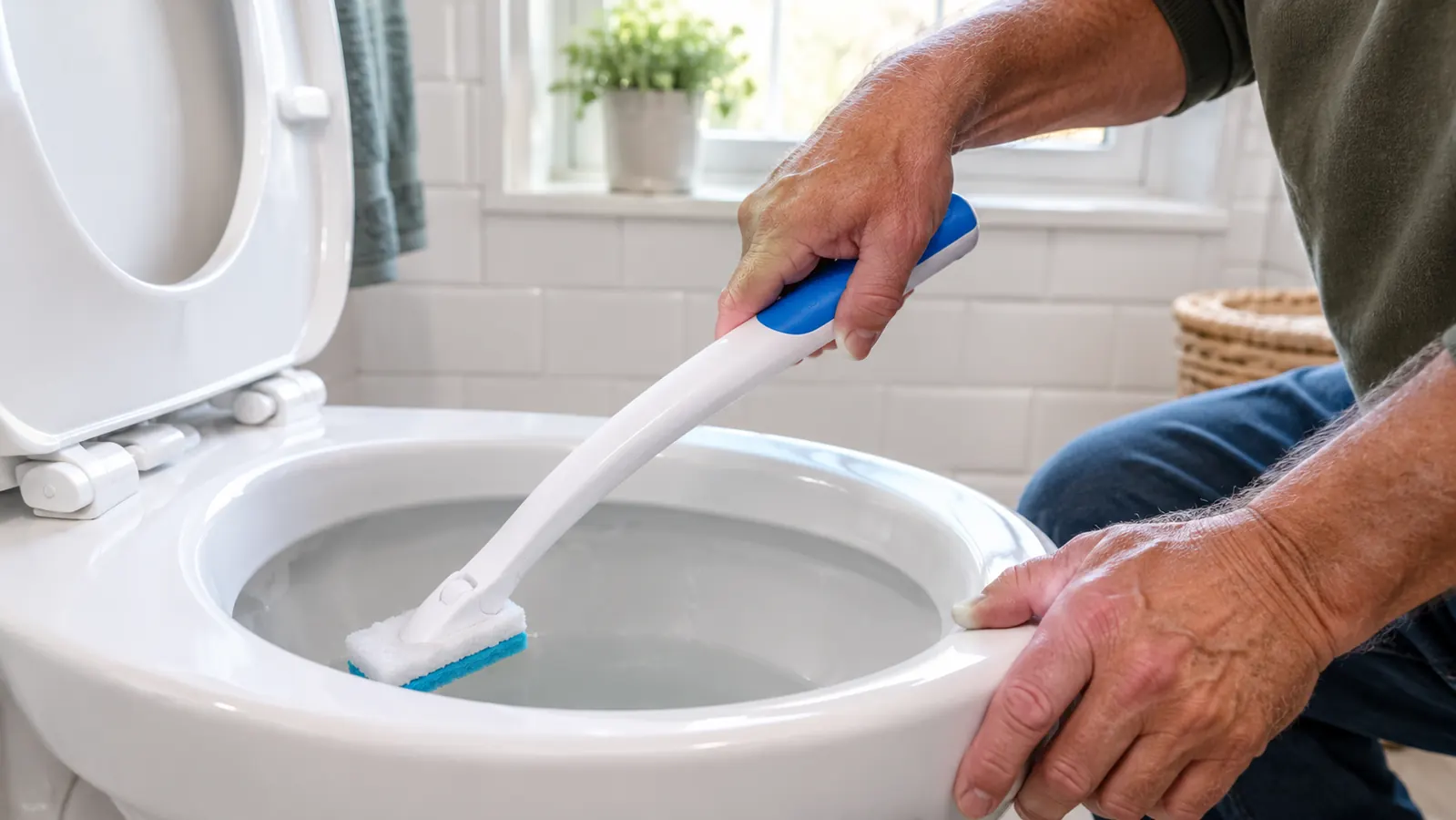
The method is simple. I load a pad on the wand, scrub the water line first because that is where our hard water bites, then the sides, then under the rim, then a fast pass at the bottom of the bowl. The pad comes off and goes straight into the trash, then I flush. No bucket, no rinsing a brush in the bowl and watching the water splash, no leaving a wet brush to sit and get worse in the corner. That last part is the reason I have not gone back.
The handle is the other thing. Clorox lists the kit at 16.81 inches and just under 15 ounces, and the length matters more than I expected. My hand stays well above the water line the entire time. With the old brush I was leaning in, and the splash zone started at my wrist.
The first week I tested it on the worst stain in the house, the one behind the water line in the hall bath that I had been avoiding because it looked like it needed a chisel. One pad, one pass with a little pressure, and it was gone. That was the moment I stopped thinking of this as a gadget and started thinking of it as the thing that replaced the bottle and the brush in one move.
One practical note from the first month. I timed myself on three separate Sundays, and the hall bath went from a twelve-minute job to under four. That is not because I got faster. It is because I stopped doing four separate things. There was no squirting cleaner around the rim and waiting for it to work, no scrubbing to spread it, no washing a brush out afterward, and no deciding where to put a wet brush so it would not drip on the tile. When you cut an eleven-minute chore down to four, you stop dreading it, and a chore you do not dread is a chore you actually do every week instead of every other week.
What the Pad Actually Does
The pad is doing two jobs at once. It is the scrubber and it is the cleaner, because each one comes preloaded with the cleaning solution. That is the whole design. You are not squeezing a bottle into a bowl and then chasing the liquid around with a brush. The solution is already where the scrubbing is happening, which means the thing you are scrubbing with is also the thing that is wet.
Clorox says the pads kill 99.9 percent of germs, and that the solution powers through tough stains and works on hard water and lime stains about twice as fast as a brush with a manual cleaner. I cannot verify the percentage in my own bathroom and I am not going to pretend I did. What I can tell you is that the ring in the hall toilet comes off in one pass now, and with the brush and the bottle it used to take two or three goes and a lot of scrubbing at an angle that made my shoulder ache.
The pads are bleach free, which I like in a small bathroom with the door closed, and the scent is listed as Rain. It is a clean smell, not a hospital smell, and it fades within a few minutes. The kit I bought came with six original pads and ten of the rainforest rush ones, sixteen total. I genuinely cannot tell much difference in how they clean. The scent is a little sharper on the rainforest rush pads and that is the only distinction I have found.
Before this I tried the tablets that drop in the tank. I ran six months of them, one a week, and the ring still came back on schedule. They may keep the tank and the trapway cleaner, and I am not going to argue with anyone who swears by them, but they did nothing for the porcelain at the water line where our stain lives. I also tried a pumice stone on the worst of it once. It worked, and it also left a dull patch on the porcelain that I can still see if the light hits it right. I would rather scrub something wet and let it go in the trash than take a scouring stone to a bowl again.
Hard Water Is Where It Earns Its Keep
If your water is soft, you could probably clean a toilet with a rag and a good attitude. Ours is not soft. The water line stains come back fast and they set. That is the specific fight this thing wins for me. The pad is abrasive enough to lift the mineral film without me scraping at porcelain with anything that could scratch it, and the solution loosens the stain first so I am not grinding at something dry.
I also noticed it handles the underside of the rim better than a brush did. With a brush you are pushing bristles up at an angle and half of them miss the porcelain entirely. With the wand I can turn the pad flat against that curve and drag it. Not perfect contact, but closer than I ever got with bristles.
The ten-day clock has not changed. Our water is still our water and I am not installing a softener to win an argument with a toilet. What changed is the five minutes it takes to reset it. Ten days after a cleaning, the ring starts to show as a pale line, and one pad and about ninety seconds of dragging puts it back to white. That rhythm, every Sunday plus a quick pass when the line reappears, is what keeps the hall bath from ever getting back to the state it was in when I was avoiding it entirely.
Sixteen Heads Lasts About Two Months Here
Two toilets, once a week, one pad each, is eight pads a month. Sixteen heads runs me about eight weeks, and that is with a few extras burned on the week everyone got a stomach bug and I cleaned everything twice. If you have one bathroom and you clean once a week, a sixteen count will sit in your cabinet for a while, which is fine because they do not go bad.
The refills are the part you have to think about. The wand itself is a one-time purchase, and the pads are what you keep buying. I keep a running list on the fridge of what to reorder, and the pads are on it now alongside the toothpaste and the dishwasher tabs. It is not a supply I want to run out of on a Sunday morning.
Storage is easy. The tub of pads lives on the shelf under the sink next to the spare hand soap, and the wand hangs on the hook where the brush used to stand. It takes up less floor space than the brush did, which in a hall bath the size of a closet is not a small thing.
How It Compares to the Brush and Bottle
A brush and a bottle are cheaper up front and there is no argument about that. The trade is time and contact. With the bottle I had to squirt cleaner around the rim, wait, then scrub, then rinse the brush, then put a wet brush back in a holder where it sat damp until the next week. That whole cycle is what the wand collapses into one step. Load, scrub, toss, flush.
The brush still wins on one thing, and I will say it plainly. It reaches the bottom bend of the bowl. The wand does not, because a flat pad on a straight handle cannot follow that curve. So I keep a small brush for that single spot and use it about once a month. If a brush is the only tool you want in the bathroom, this does not fully replace it. It replaces most of it.
What Still Bothers Me
The pad does not get into the tight bend at the bottom of the bowl. I said it above and it is the one real limitation. It is a flat scrubber on a straight handle, and the trapway curves away from it. If you want to never own a brush again, know that this handles everything above the bend and leaves that one spot to whatever you already have.
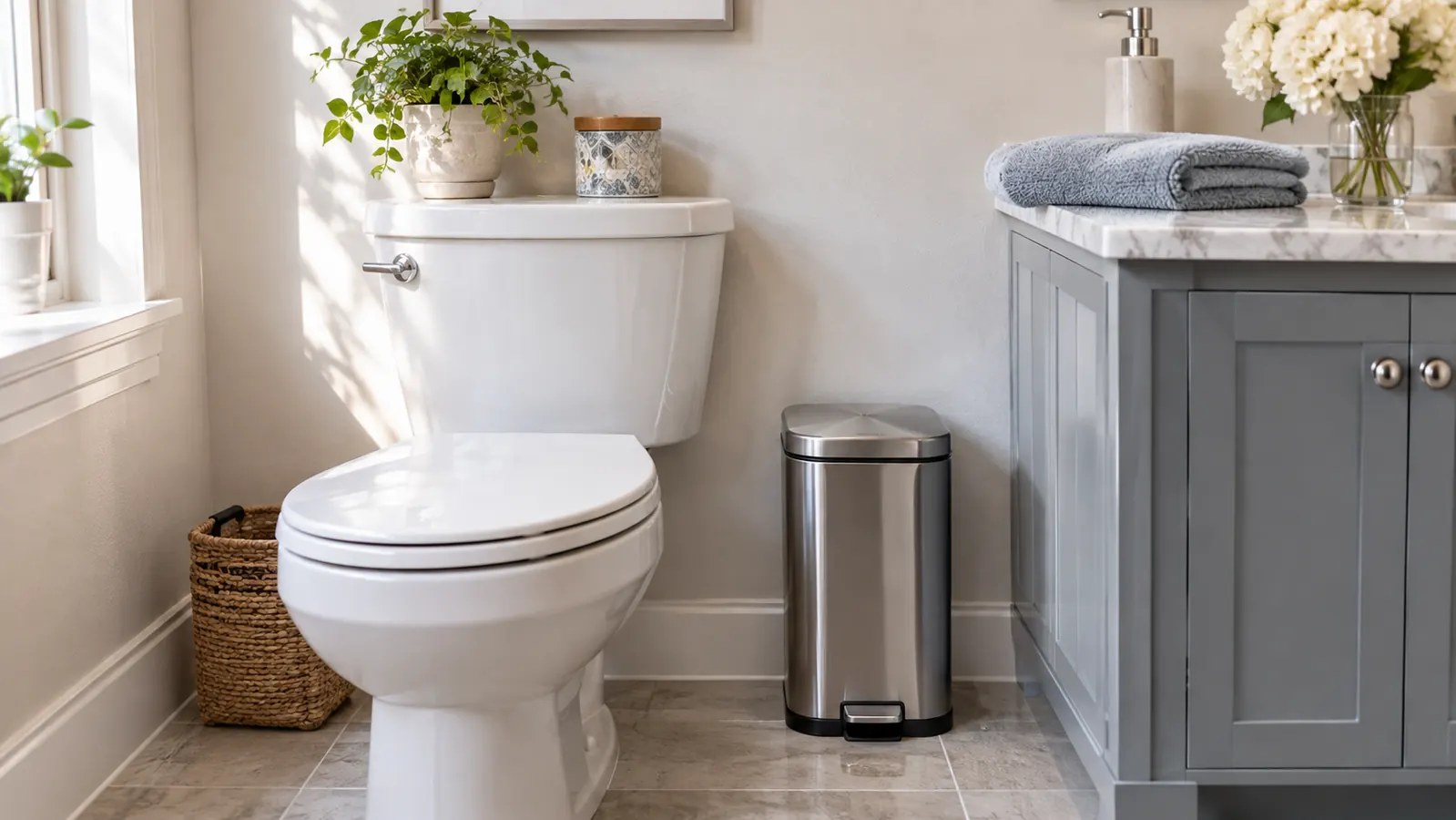
The pads go in the trash, which means the bathroom bin gets a wet, cleaner-soaked pad in it once a week. I keep a small lined bin with a lid beside the toilet and that solved it, but nobody mentions that part when they describe the product. Also, once a pad is on the wand you want to use it and be done. If you set it down and come back ten minutes later, the pad has gone soft and does not scrub as well as it did fresh.
And the scent, while pleasant, is not subtle when the pad is new out of the tub. In a small bathroom with the door shut it is noticeable for the first few minutes. It does not bother me. Ray noticed it the first time and asked what I had changed, which is more attention than the toilet has ever received from him.
What I Liked
- Cleaner is already in the pad, so there is no bottle to squeeze and no mixing
- Long handle keeps hands out of the bowl and away from splash
- Lifts hard water and lime stains in one pass where the brush took three
- Nothing to rinse and store, the pad goes straight in the trash
- Bleach free pads with a light scent that fades in a few minutes
- Sixteen heads covers about two months of weekly cleaning on two toilets
Where It Falls Short
- The pad misses the tight bend at the bottom of the bowl
- Refills are a recurring purchase you have to stay ahead of
- A wet pad in the bathroom trash needs a lined bin with a lid
- A fresh pad smells strong for the first few minutes in a small room
The ring in the hall toilet comes off in one pass now. With the brush and the bottle it took three, and my shoulder paid for every one of them.
Who This Is For
This is for the person who does the bathrooms and is tired of the brush. If you have hard water, if your bowl stains at the water line, if you have a teenager or a shift worker sharing a hall bath, this cuts the job down to about a minute a bowl and removes the worst part of it, which is the rinsing and the storing of a wet brush. It is also for anyone with a shoulder or a back that does not want to lean into a bowl and hold that position while scrubbing.
It fits a normal weekly routine. I am not a person who cleans a toilet every day and I do not think most people are. Once a week plus a spot pass when something happens is what this thing is built for, and at that pace sixteen heads covers about two months in a two-bathroom house.
It is also easy to hand off. I gave the first kit I bought to Marcus when he started cleaning his own bathroom, and he uses it without being asked twice, which is the highest praise I can give a cleaning product in this house.
Who Should Skip It
If you want one tool that reaches every part of the bowl including the bottom bend, skip it or plan on keeping a brush alongside. If you hate buying refills and would rather own a brush you replace once a year, this is the wrong trade, because the pads are the product and they run out on a schedule you have to pay attention to.
And if scent lingers in your mind more than it lingers in the air, the fresh pad is noticeable for a few minutes in a small room. It fades. But it is there. Two of those three objections are the ones I hear from friends when I bring this up, and I still answer the same way. I would buy it again, and I did.
Two Months of Weekly Cleaning in One Box
One wand, six original pads and ten rainforest rush pads. If your water is hard and your brush is older than your children, this is the swap to make.
Amazon Check Today's Price on Amazon →