
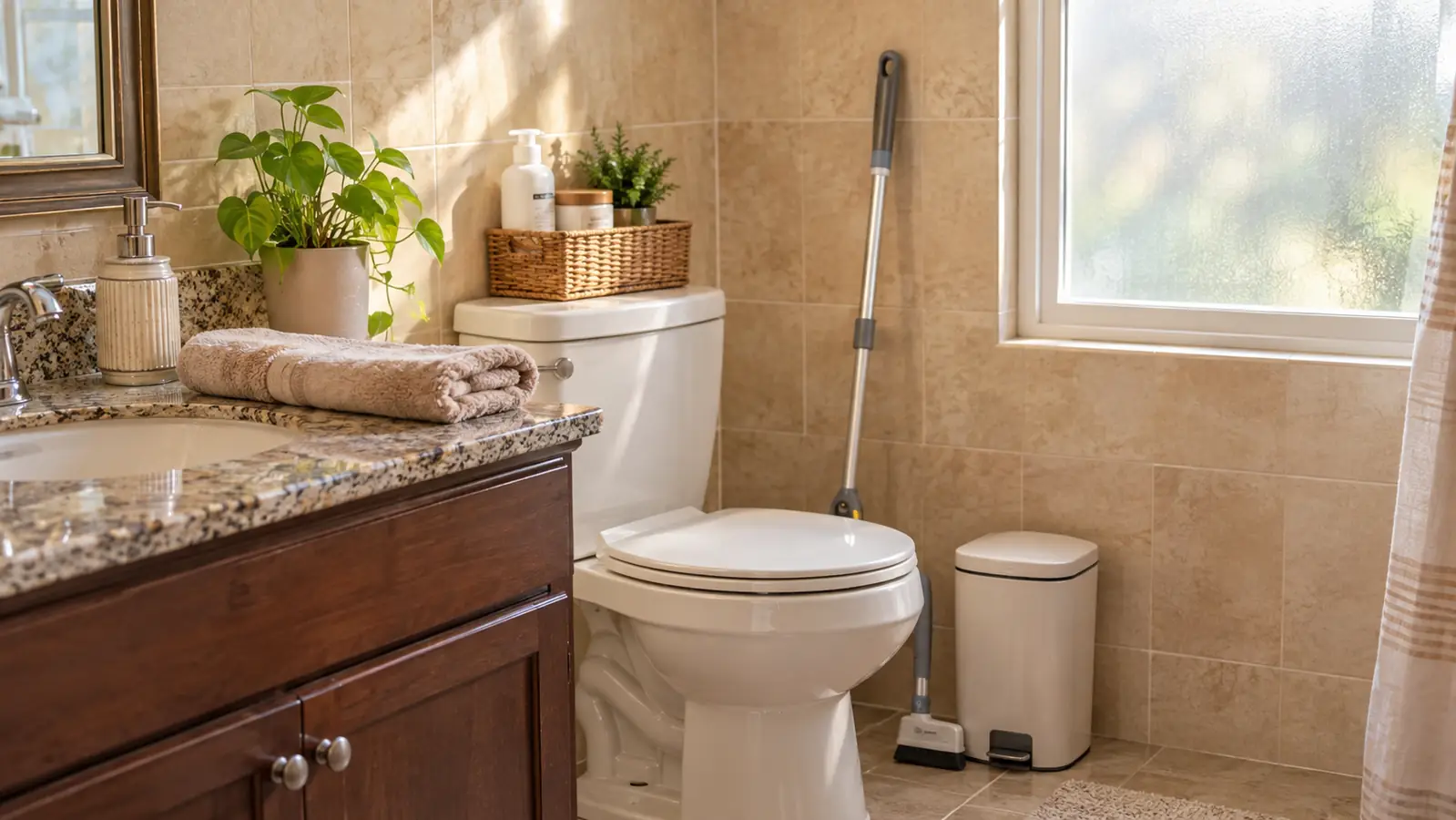
I did not want to like a disposable toilet wand. I am fifty-two, I have been cleaning the two bathrooms in this house for close to thirty years, and I have a scrub brush under each sink that has never let me down. But our water is hard, the kind that leaves a chalk ring around the bowl no matter what I pour in, and last spring I got tired of kneeling on the tile with a brush in one hand and a bottle in the other. So I bought the Clorox ToiletWand kit, the one with the wand and sixteen refill heads, and I have used it in both bathrooms long enough now to have opinions that are not all flattering.
Here is the short version before I get into the parts the product page skips. It works. It cleans the bowl faster than a brush and a bottle, and it takes the ring off the waterline without me scrubbing like I am trying to start a fire. It also creates something I have to keep buying, and it does not replace a brush for every job in that room. Both of those things are true at the same time, and a review that only tells you one of them is not much help when you are sitting at your kitchen table with your phone.
The Quick Verdict
Faster than a brush and a bottle on the bowl itself, and the pads do the scrubbing for you. It is a repeat purchase in disguise, and it will not clean the outside of the toilet, the base, or the floor around it.
Amazon Check Today's Price →Sixteen pads, one long handle, and no more kneeling on the tile
The starter kit covers a normal two bathroom household for about seven weeks of weekly cleaning. Look at the refill sizes before you order, because you will need them sooner than the box suggests.
Amazon Check Today's Price on Amazon →How This Wand Ended Up in My House
There are three of us. My husband Ray works shifts, so he is in and out of the house at odd hours. My son Marcus is sixteen and has the aim you would expect from a sixteen-year-old. We have the hall bathroom the two of them share and the primary bathroom off our bedroom, which means two toilets, both cleaned weekly and touched up in between.
For years my routine was a brush, a bottle of bowl cleaner, and a pair of yellow gloves. It worked, and I am not going to pretend it did not. What I minded was the kneeling. Our hall bathroom is narrow and the toilet sits close to the tub, so there is no good way to get down there and reach the back of the bowl without putting a knee on the tile. The brush handle is short. The bottle has to be aimed. By the time I finished I had usually dripped something on the floor and had to start over on the tile.
Before I bought the wand I tried the cheaper fixes first, in this order. A gel bowl cleaner that clung to the porcelain and smelled like a swimming pool. A bristle brush with a handle about eight inches long, which is the one I still own. A pumice stone I bought after the ring in the primary bathroom turned the color of weak tea. And a pack of those disposable cleaning cloths, which did nothing at all on the waterline. What none of them fixed was the reaching. The gel did the chemistry fine. The problem was always the last four inches at the back of the bowl.
The wand changes the geometry of the job more than it changes the chemistry. The handle on this one is long, and it lets me stand at the side of the bowl and reach down into it instead of folding myself over the seat. I still get close, but my knees stay off the floor. That alone was worth trying it. The rest of this review is about whether everything else holds up once the novelty wears off.
What Is Actually in the Kit, and What That Means Two Months In
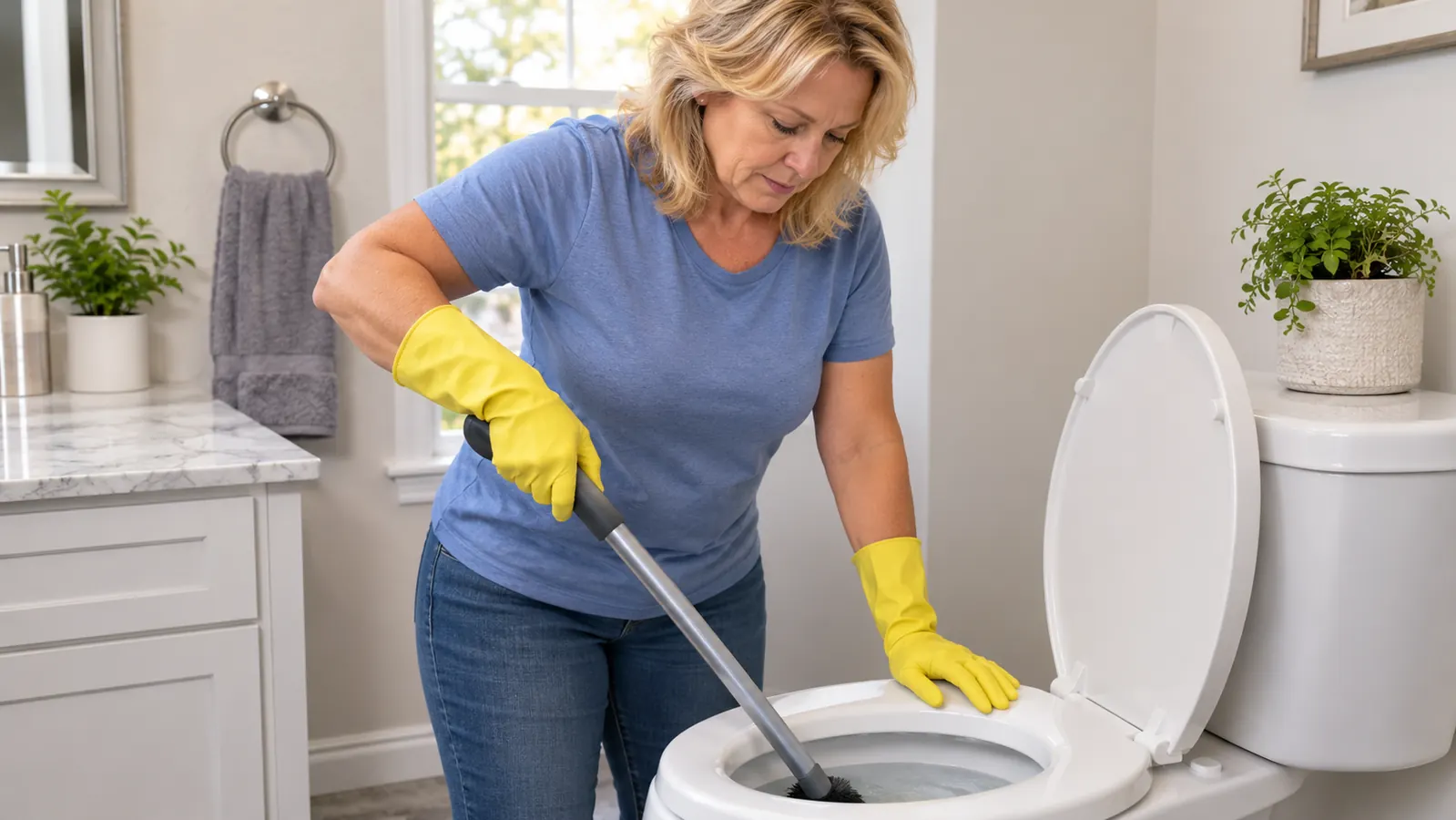
The Clorox starter kit is the wand and sixteen disposable scrubbing pads, six of the original and ten of the rainforest rush version. The pads come preloaded with cleaner, so you are not carrying a bottle into the bathroom. They are bleach free and they are scented. The pad goes onto the head of the wand, you scrub the bowl, and then the pad comes off into the trash when you are finished. You never touch the wet end with your hand, and that is the entire reason I was willing to try this in the first place.
Here is the part the listing does not spell out, and it is the part that decides whether you keep buying this. The pads are consumable. On a normal weekly clean I use one pad per bowl, so two pads for the house, and if the waterline ring is bad I use a second pad on that bowl. Sixteen pads is seven or eight weeks for us, closer to seven. That is not a complaint exactly. It is the honest shape of the thing. The wand is a one time purchase and the pads are the product, and you will be buying more in two months whether you planned to or not.
Sixteen pads lasted me seven weeks across two bathrooms. That one number tells you more about this kit than the rest of the listing does.
The Pads Do the Work, and That Is the Whole Point
With a brush you supply the cleaner and the elbow grease separately. With this, the cleaner is already in the pad, and the pad has enough texture to take the film off the porcelain without me leaning into it. I noticed it most at the waterline, where the hard water leaves that pale band. Two passes and it was gone. With a brush and my usual bottle I would have been at it for a minute or more, and I would have used far more cleaner than the pad holds.
I timed myself one Saturday in April, mostly out of curiosity. Brush and bottle on the hall toilet: three minutes forty seconds, not counting rinsing the brush and setting it back in its holder, which is another minute if you do it properly. Wand: one minute fifty, including pulling the pad off and dropping it in the bin. The four minute brush job is not ruinous. But four minutes of kneeling in a narrow room twice a week is the part that adds up, and the wand cut it roughly in half.
The listing says the pads kill 99.9 percent of germs and that the cleaning solution eliminates hard water and lime stains twice as fast as a brush with a manual bowl cleaner. I am not a lab and I cannot verify either number at my kitchen sink. What I can tell you is that I stopped keeping a bottle of bowl cleaner under the hall sink, because I did not need it anymore, and that the ring I used to fight every single week stopped being a fight. That is the claim I can actually stand behind.
The scent is worth a mention because I have sensitive skin and a nose that notices things. The rainforest rush pads smell like a cleaning product, which is to say noticeable while you are using them and mostly gone by the time you leave the room. It did not bother my skin because I never touch the wet pad. If fragrance bothers you in general, pay attention to how you feel after the first week before you order a larger refill pack.
Hard Water Is the Real Test, and It Mostly Passes
Our water is hard enough that the shower head needs soaking twice a year and the kettle gets a crust. Toilets show it at the waterline and down the back of the bowl where the refill runs. Before the wand, that band was a ten minute job with a brush and a pumice stone I keep in a bag under the sink. I want to be careful about the pumice, because it will scratch porcelain if you get impatient and I have scratched a bowl before. I was hoping the pad would make the pumice unnecessary. It mostly did.
I should say what our water is actually like, because hard covers a lot of ground. The shower glass films over in about ten days. The kettle needs a vinegar soak every six weeks or it starts to sound like it is boiling gravel. The toilets are the least of it, but they are the first thing a guest sees, so they get the most attention. That is the standard I am holding this wand to. Not a spotless showroom bowl. A bowl in a 1990s suburban Houston house with water that fights back.
Two passes around the waterline with a fresh pad took the band off, and one more pass down the back of the bowl where the water runs took care of the rest. I did not need the pumice in either bathroom for the first month. In month two, the primary bathroom bowl needed a light touch with it again, because that bowl gets used more and the water sits in it. That is not a failure. It is a reminder that this is a cleaning tool, not a water softener. Nothing you put on a wand fixes the water.
Where the wand does not reach is under the rim. The head is a flat pad on a short neck, and it will not get up into that channel the way a brush with stiff bristles will. I still keep one brush in the hall cabinet for the rim, and for the occasional week when I want to scrub the whole bowl rather than wipe it. If you are expecting this to let you throw the brush away entirely, you will be disappointed somewhere around week three, when you finally notice the underside of the rim.
Where It Genuinely Falls Short
The waste is the thing I think about most. Every clean puts two pads in the trash, and over a year that is somewhere north of a hundred of them. They are not recyclable in my curbside bin, and they do not break down in any way I can see. I am not going to pretend that does not bother me. It is the trade I made for not kneeling on the tile and not handling a wet brush, and I made it with my eyes open, but if you are trying to cut down on what your house throws away, this is a step in the wrong direction.
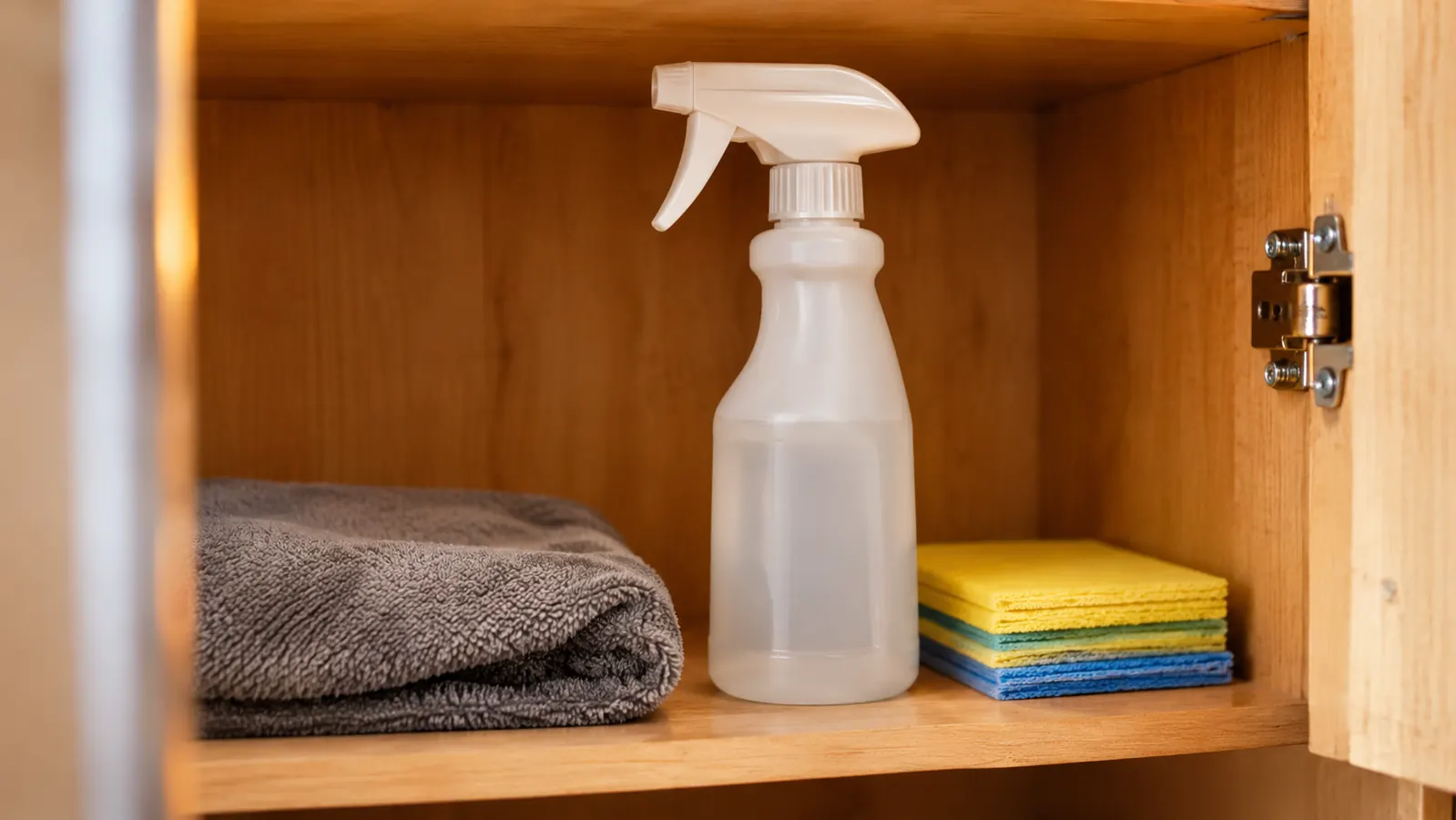
It is also a bowl tool and nothing more. It does not clean the outside of the toilet, the hinges, the base, or the floor around it. I still keep a spray bottle and a rag for those, and I still wipe the seat and the lid down by hand. What it replaced was the bowl cleaner and the brush, not the rest of the bathroom routine. Anyone who tells you one wand handles the whole room is selling something.
Storage is a small annoyance. The kit is the wand and the pads, no holder, so the wand lives in the cabinet next to the spray bottle. Our hall cabinet is twelve inches deep with the shelf at about the height of the toilet tank, and the wand measures just under seventeen inches end to end, so it cannot stand up in there and has to lie flat across the shelf. For two weeks it sat on the floor beside the bin, which is not where I want a cleaning tool living, until Ray screwed a hook onto the inside of the cabinet door and hung it there. That solved it. If you do not have a hook and a few free inches of door, expect to lay it across a shelf and move it every time you want the bottle behind it.
What I Liked
- The long handle lets you clean standing at the side of the bowl instead of kneeling on the tile
- The pads are preloaded with cleaner, so there is no bottle to carry into the bathroom
- Took the hard water band off the waterline in two passes in both bathrooms
- You never touch a wet brush or a wet pad with your bare hands
- Bleach free, and the scent clears out of a small bathroom quickly
Where It Falls Short
- Every clean puts two pads in the trash, and they are not recyclable in my curbside bin
- It does not reach under the rim the way a stiff bristle brush does
- Cleans the bowl only, not the outside, the base, the hinges or the floor
- The pads are a repeat purchase and sixteen does not last as long as it sounds
- No holder in the kit, and the wand is too long to stand up in a shallow cabinet
What I Would Tell a Friend Before She Buys
If a friend asked me in the school pickup line whether to buy this, I would ask her two questions. Do you have a bowl you fight with every week, and do you mind buying refills? If the first answer is yes and the second is no, buy it, because it will save you time and the pads do the work. If the second answer is yes, buy a better brush and a bottle and keep your routine, because the refills are the whole point of this product and there is no version of it that does not require them.
The other thing I would tell her is to order refills at the same time as the kit. Sixteen pads sounds like a lot when you open the box. It is not. I did not do that, and I ran out on a Saturday with a house full of people, and I ended up scrubbing the hall bathroom with the backup brush and a bottle like it was 2005. Order the refills with the kit. Learn from my Saturday.
Who This Is For
This is for a household with at least one toilet that gets heavy use, hard water, or both, and someone who does the cleaning and would like to be in and out of that room in five minutes. It suits older adults or anyone with knee or back trouble, because the long handle lets you stay upright. It suits a shared bathroom used by teenagers. It is also a decent choice for a guest bathroom that sits unused for weeks, because there is no bottle to go stale and no brush sitting in its own water between visits.
Who Should Skip It
Skip it if you are trying to reduce what your household throws away, if refills are not in the budget right now, or if your toilet has a rim that needs a bristle brush to come clean. Skip it if you want one tool that handles the whole bathroom, because this is not that tool and does not pretend to be. And skip it if you are the sort of person who will use the last pad and not reorder, because then you will own a seventeen inch wand with nothing to put on it, and a brush would have been the better buy.
If you are going to try the Clorox ToiletWand, start with the kit and the refills together
The wand earns its place beside the toilet. The pads are what you will run out of. Check the current price on the starter kit, then look at the refill sizes while you are on the page.
Amazon See the Clorox ToiletWand Kit on Amazon →