

Ray shaves every morning before a shift that starts at six. For years he did it the fast way, a disposable razor and a squirt of whatever gel was on sale, ninety seconds at the sink and out the door. By the time he reached the truck his neck was blotchy. By Friday it was sore enough that he skipped the weekend entirely, and Monday was worse for it. That cycle ran for the better part of a decade, and I stopped counting the number of times he came home and rubbed the side of his neck without saying anything about it.
He tried the usual fixes first. A different disposable, which was the same razor with a different handle. A gel marketed for sensitive skin. Shaving at night instead of the morning, which just moved the redness to a different part of the day. What finally worked was not a sharper blade. It was a Braun Series 3 and a slower order of operations, and the change showed up in about a week.
I am writing the routine down because the routine is the part that transfers. Anyone can buy the shaver. The five steps below are what keep a daily shave calm in a house with hard water, one shared hall bathroom, and a teenage son who also uses the thing on school mornings.
A Daily Shave That Leaves the Neck Alone
The Braun Series 3 is a cordless foil shaver with three blades on a floating head and a precision trimmer for sideburns and moustache edges. It runs wet or dry, rinses under the tap, and charges on a smart plug that handles any voltage on its own.
Amazon Check today's price on Amazon →Step 1: Shave After the Shower, Not Before It
A dry whisker is stiff and a wet one is not. Three minutes under warm water softens the hair enough that the cutter meets almost no resistance, and resistance is what turns a shave into a scrape. Ray's alarm goes at 5:10 and he is in the shower by 5:15, which sounds like ceremony for a shave until you remember he used to spend four minutes scraping at the sink and then another two minutes dabbing at his neck with a tissue. He showers first now, every weekday, and shaves second with a towel around his waist and the exhaust fan running.
The mirror fogs up, which sounds like a complaint and is actually useful. It forces you to wipe a clear patch and look at your own neck before you start, and the neck is where the trouble always is. You cannot fix what you have not looked at. On the mornings he skipped that look, he would find the red patch at lunch instead, in the truck mirror, and by then there was nothing to do about it but wait for it to fade.
On mornings when there is no time for a shower, a warm washcloth held against the face for a full minute does most of the same job. Not ten seconds. A full minute, while the kettle boils or the coffee runs, and then straight into the next step. I timed it once out of plain curiosity and a minute is longer than it feels. Most people give it twenty seconds, call it done, and get roughly the same result as shaving dry with extra steps.

Step 2: Wash the Face, Then Leave It Damp
Soap and warm water lift the oil that makes a foil head skip and stutter. Our water is hard enough that it leaves a film on the shower glass, so Ray rinses twice, once with soap and once with clear water, then blots with a towel instead of rubbing. Blotting matters more than it sounds. Rubbing a towel across a face you are about to shave with is a small abrasion you pay for twenty minutes later.
Do not scrub or use a face brush right before shaving. Roughing up the skin and then running a cutter over it is how you end up with a red neck that lasts until lunch. If you want to exfoliate, do it at night, not at six in the morning. Marcus learned this the hard way in September when he used my scrub before picture day and spent the whole morning looking like he had a sunburn on one side of his jaw.
Leave the skin slightly damp when you pick up the shaver. The Series 3 runs wet or dry, and either is fine, but damp skin with something slippery on it is the combination that keeps the head gliding instead of dragging. Bone dry is the second worst thing you can hand a foil head. The worst is damp skin with nothing on it at all, which is the texture of a wet rubber glove.
Step 3: Pick One Lubricant and Stay With It
Braun builds the Series 3 for water, foam or gel, so the choice is yours and the only real mistake is changing your mind halfway through a pass. Ray uses a cheap unscented shave gel. Marcus uses nothing at all, dry, because he is sixteen and in a hurry. Both of them have settled on it, and neither one switches now, which is the actual point of this step.
If you shave dry, shave dry all the way and give the head a second to warm against the skin. If you use gel, use enough that the head slides, and rinse the leftover off before it dries. Dried gel on a foil becomes a stiff film you then drag across your jaw. I have watched Ray do this exactly once, on a morning he got distracted by a phone call, and he came back to the sink looking like he had been in a fight with a cat.
We tried shave oil for about three weeks in the spring and it was worse, not better. Oil does not rinse off a foil the way gel does, so the head collected a film that took the small brush and real patience to clear, and the shave got progressively rougher as the week went on. The gel goes on faster, rinses cleaner, and costs less. Skip anything heavily scented or heavily cooling on days when your skin is already pink. The job of the lubricant is slip, not sensation, and a strong menthol tingle on a raw neck is not the help it advertises itself as.
Step 4: Use Less Pressure Than Feels Right
The Series 3 has three blades on a free floating head that follows the shape of the face, plus a middle trimmer for the hairs that lie flat. All of that only works when the head is actually free to float. Press it into your cheek and you have pinned it flat, and now you are scraping. This was the hardest habit for Ray to break, because pressing hard is what a disposable razor trained him to do for twenty years.
Short strokes, light contact, and let the head find the corner of the jaw on its own. Use your free hand to stretch the skin where it folds, under the chin and along the side of the neck, so the hair stands up instead of hiding in the crease. The first week he did this he swore it was not cutting close enough. It was. He was feeling the absence of pressure and reading it as the absence of a shave.
One pass in each direction beats five passes over the same square inch. If a patch will not come clean, it is usually because the hair grows flat there, not because you were not pressing hard enough. Come back to it once at the end with the flat of the head and leave it alone after that. On day four he had a stubborn spot under the jaw and went over it eight times in a row. That spot was red for two days, and the hair came back the next morning regardless, which should tell you something about what the eight passes bought.
Step 5: Rinse the Head, Cap It, Charge It
The shaver is waterproof, so the whole head rinses under the tap in about five seconds. Do it every day, not every third day. A foil packed with dried soap and clippings cuts badly, and a bad cut is what makes you press harder, which walks you straight back into the mistake in step four. This is the step that quietly decides whether the rest of the routine works.
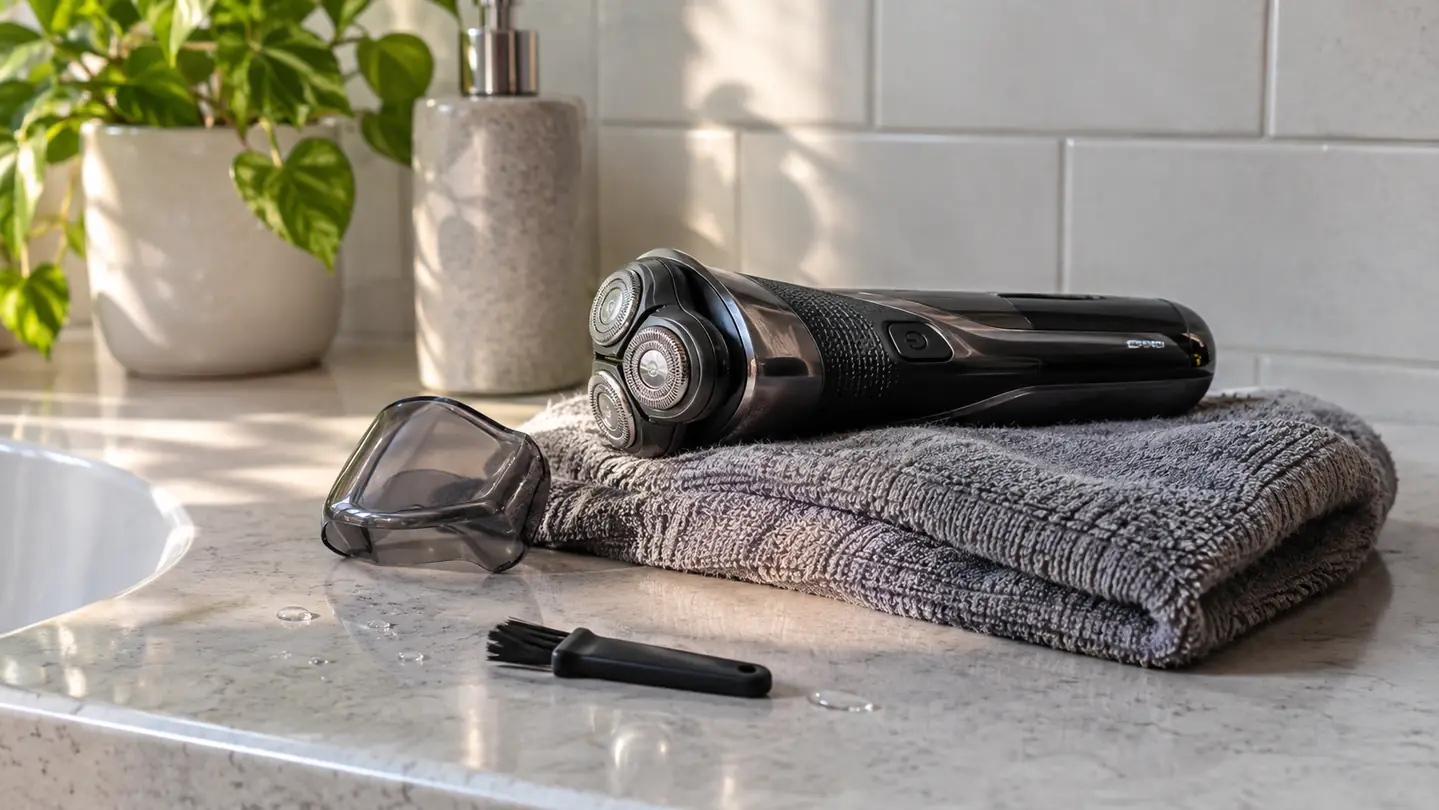
Once a week, take the small brush that comes in the box and work the clippings out of the head before you rinse it. Let it air dry with the protective cap off, then put the cap on. The cap is for the drawer and for travel, not for a wet head, because trapping water against a foil does nobody any favors. Sundays are when this happens here, right after the sideburns, so it gets tied to something already in the routine instead of being a separate chore.
It runs 45 minutes on a charge, which covers roughly two weeks of five minute mornings, and the cordless part matters more than it sounds. A cord in a wet bathroom is a nuisance you start avoiding, and a shaver you avoid is a shaver that stops helping. The smart plug handles 100 to 240 volts by itself, so it does not need a converter on a trip. It weighs about 11 ounces and sits in the drawer in its cap without taking up the shelf space the old bag of disposables did.
Eight days in, the red patch on his neck was gone. Same razor, different order of operations.
If It Still Stings After Two Weeks
Work back through the steps in order and find the one that slipped. In this house it is almost always pressure, and it usually happens on a rushed morning when the gel ran out and a dry pass got forced through. A dry pass over three days of stubble is a different event than a dry pass over one day of it. Missing one morning is not a problem. Missing three and then making up for it in sixty seconds is.
The second most common cause is a dirty head. Rinse it, brush it, and give it a full day to dry before you judge the shaver. If your skin is still angry after two clean weeks on this routine, the honest answer is that a foil shaver may not suit your neck, and a blade used properly might. That is not a failure of the tool. It is information, and it is cheaper to learn in two weeks than in two years.
What Else Helps
Moisturize after, not before. A plain unscented lotion on a damp face takes ten seconds and does more for a sore neck than any post-shave product with alcohol in it. Alcohol feels like it is doing something. Mostly it is drying the skin out, which is the opposite of what a repeatedly shaved neck needs. I keep one bottle in the hall bathroom cabinet and it is the same bottle I use on my own hands in winter.
Use the precision trimmer for the sideburns and the edge of a moustache rather than trying to draw a straight line with the foil head. The MicroComb on it is designed to catch the hair that would otherwise slip past. Ray does his sideburns with it every Sunday, dry, before he shaves the rest. It takes about forty seconds and it is the difference between a tidy edge and one that looks chewed.
Braun puts the life of the shaver at up to seven years, which is a long time for something that touches your face daily, and the two things that decide whether you get anywhere near that are rinsing it and not dropping it on tile. Treat the head like a small tool rather than a scrub brush and it will keep cutting the way it did in week one. Also give it a shelf or a drawer spot that is not the edge of the sink, because the sink edge is where these things fall from.
Start With the Razor, Then Copy the Routine
Two weeks of the five steps is enough to know whether it works for your skin. The shaver is the one thing you buy. The order of operations costs nothing and is the part that actually fixed Ray's neck.
Amazon Check today's price on Amazon →