

My skin started complaining about showers the year I turned fifty. Not a rash, nothing I would have made an appointment over, just a tight, papery feeling across my shins and forearms that showed up about ten minutes after I got out and stayed until I thought to put lotion on. It got worse every January and worse again once the air conditioning ran from April through October. For a long time I blamed the water. Houston water is hard enough to leave a film on the shower glass, so that seemed like a reasonable suspect. Then I started paying attention to the order of things instead of just the products, and the order turned out to matter more than any single bottle. Dove Sensitive Skin Body Wash is what sits in our hall shower now, and this is the routine I actually use with it.
What I had backwards for years: I treated dry skin as a problem you solve after the shower, with lotion, in a hurry, on the way to bed. That is the last step, not the first. Most of what makes my skin feel tight happens during the shower itself, and it happens in three places. How hot the water is, how long I stand under it, and what I put on my skin while I am in there. Get those three roughly right and the lotion at the end has far less work to do. Get them wrong and no bottle on the shelf is going to save you.
The bottle I reorder before it runs out
Dove Sensitive Skin Body Wash is a sulfate-free, paraben-free liquid cleanser in a 30.6 oz pump bottle. It has a light scent and a light creamy lather, and it is the one thing in this routine I have not swapped out in over a year.
Amazon Check Today's Price on Amazon →Step 1: Turn the water down before you change anything else
This is the step people skip, because it is free and boring. Hot water feels good and it also takes the most off your skin. I turned our shower dial down one notch a week until I could stand under it without flinching and still feel warm. That took about a month. The difference in how my shins felt afterward was bigger than the difference between any two body washes I have tried.
A simple test: run the water over the inside of your wrist for ten seconds. If it makes you pull your hand away, it is too hot for the rest of you. Aim for warm. In our house that is roughly one full turn back from where the dial sat for fifteen years. Nobody has complained about it except me, and I was the one who moved it.
The other half of this is the last thirty seconds. I finish every shower with a short cool rinse. It is not pleasant in February and it is over quickly, and it settles the skin down noticeably. Ray thinks I am punishing myself. He also stopped complaining about his forearms cracking in the winter, so I notice he has started doing it too.
The other thing I did that month was check the water heater. Ours was set hotter than it needed to be, and turning it down meant the shower could not get as hot even when someone wanted it to. Ray adjusted it on a Saturday morning in January and we have not touched it since. If you rent, skip that part and just move the dial.
Step 2: Wash less of you than you think you need to
Most cleanser labels assume you are lathering head to toe every day. You do not need to. I wash what actually needs washing, which is hands, underarms, feet and face, and I let warm water handle the rest. My shins and forearms get cleanser every other day now, sometimes less in winter when they are under trousers all day anyway.
The reason this helps is not complicated. Every wash takes something off, including the bit you wanted to keep. If the skin on your legs is not dirty and not sweating, there is nothing to remove, and the cleanser is only costing you moisture you will have to put back later with a lotion that costs more than the wash did.
Before I changed any of this I bought a soft body brush, thinking I needed to scrub my way out of the problem. That was backwards. Twenty seconds of work on tight skin left my shins pink and stinging, and the flaking came back two days later anyway. The brush went in the bin. What my skin actually needed was less, not more.
Our son Marcus is sixteen and used to take a twenty minute shower every night, which is a different kind of problem. When his shoulders started breaking out and then drying out in the same week, I put a kitchen timer in the bathroom. Twenty minutes became eight. His skin settled down and the bathroom stopped turning into a sauna for an hour afterward.
Step 3: Use the pump the way it is meant to be used
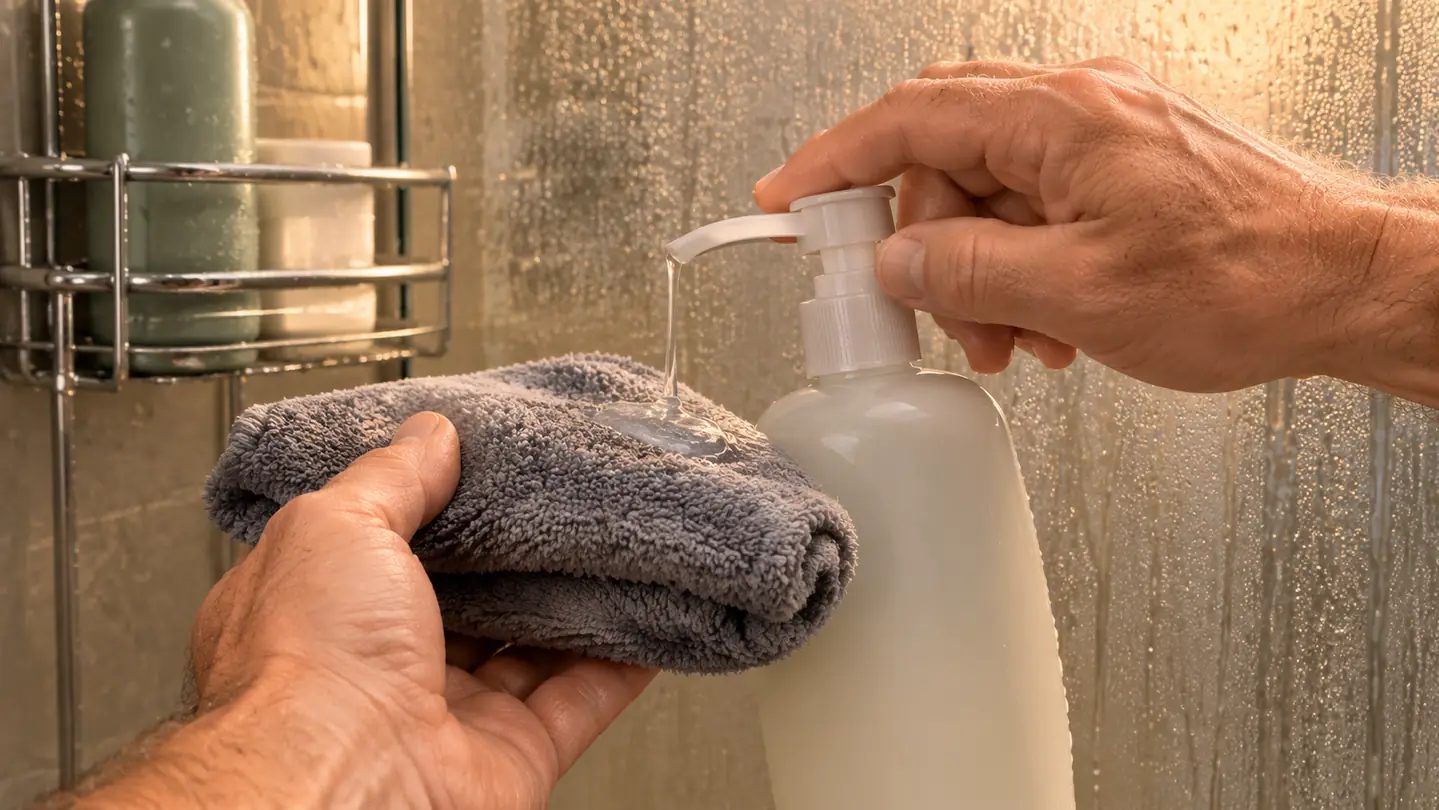
Dove Sensitive Skin Body Wash is a liquid cleanser in a 30.6 oz pump bottle, and one full pump is more than a whole shower needs. Half a pump onto a wet washcloth is enough for me from neck to knees. Two halves covers a full shower if you are washing everything. You get a light creamy lather rather than a thick foam, which is what a sulfate-free formula does.
Put it on the cloth or into your hands first, not directly onto your skin. A dollop straight onto an arm means a heavy patch of cleanser in one spot and nothing anywhere else, and it takes longer to rinse. An even, thin layer does the same job in less time, which matters more than it sounds.
Two minutes. That is the number that changed things for me. I used to stand in the warm water after lathering and let it run over me while I thought about the day ahead. That is five extra minutes of warm water on skin that has already been cleaned. Now I lather, rinse, and get out. The listing mentions millions of MicroMoisture droplets, and it does leave skin feeling softer than a plain bar does, but no formula survives ten minutes under a hot shower.
Two degrees cooler and four minutes shorter did more for my shins than every lotion I bought last year.

Step 4: Pat dry and put something back on within three minutes
The towel matters more than people expect. Scrubbing yourself dry with a rough towel is abrasion, and it undoes a good wash in about four seconds. Pat. Fold the towel over your arm, press, move on. If your towel has gone stiff from fabric softener, replace it, because a stiff towel scratches and you will not notice until your skin is pink.
Then lotion, while skin is still damp. Not dry. Damp. Three minutes from stepping out is the window I aim for, and it is the one habit on this list I would keep if I could only keep one. On damp skin a plain unscented lotion spreads further and sinks in faster, so you use less of it and it does more.
That window sounds fussy until you actually time it once. I did, with the kitchen timer, on a Tuesday in February. Out of the shower at 6:41, lotion on by 6:44, dressed by 6:50. On the mornings I got distracted and did not get to it until twenty past, my forearms felt different by lunchtime. Same bottle, same shower, different skin.
Keep the bathroom warm enough that you are not rushing. A cold bathroom means a fast, hard towelling and a thin, patchy layer of lotion. Ray turns the heat off in the hall bathroom to save energy and then wonders why his hands crack in February. I have stopped arguing and started leaving a pump bottle next to the sink instead.
Step 5: Fix the things that quietly undo the wash
You can do steps one through four perfectly and still have dry skin if the room fights you. Our water is hard. A filtered shower head did not turn Houston water soft, but it cut the film on the glass and my arms stopped feeling coated after a shower. That is a modest improvement, not a transformation, and I would not spend a lot on it.
The second thing was the laundry. Towels washed in a heavy detergent and softened with fabric softener leave a residue that ends up on you every time you dry off. I cut the softener out entirely and ran an extra rinse on the towel load. It took two weeks to notice a difference and then it was obvious.
The third thing was the rest of the house. Air conditioning pulls moisture out of the air and I run it for six months a year. There is not much to do about that except keep the lotion where I will see it. The bottle on the counter gets used. The bottle in the cupboard does not, and I have thrown out enough expired ones to know.
What Else Helps
Three smaller things that made a difference in our house. First, washcloths. I bought a stack of cheap white ones and put a fresh one out every other day, which sounds fussy and is not. A washcloth that has been sitting damp on the edge of the tub for a week is not doing your skin any favours, and white ones tell you the truth about when to change them.
Second, I stopped adding anything to the bath. No oils, no bubbles, no salts. Marcus likes a bath now and then and the bubbles left him itchy across the back for an hour. Plain warm water and half a pump of Dove is a better bath than one with three products in it, and it is easier to rinse out of the tub afterward too.
Third, and this one surprised me, I stopped keeping bar soap in the guest shower. It was there for years because it had always been there. Bar soap is fine, but an old bar sitting in a puddle of water is not, and guests were using it and then wondering why their arms felt tight afterward. I put a pump bottle in there instead and nobody has mentioned it since.
One more small thing: I moved the pump bottle. It used to sit behind the shower curtain where I had to reach for it with wet hands, and half the time I knocked it over. It sits on the caddy now, at shoulder height, where a half press lands on the washcloth without me looking at it. Small change. It also means I stop at half a pump instead of a full one out of impatience.
When This Is Not Enough
I want to be straight about the limits here. This is a shower routine, not a treatment. If your skin is cracked, bleeding, itching badly enough to wake you up, or flaring in patches, that is a conversation with a doctor or a dermatologist, and no body wash is a substitute for it. I have mildly sensitive skin that dries out in conditioned air. That is a different thing from eczema or psoriasis, and I am not going to pretend otherwise.
It is also worth saying that the wash is one part of this and probably not the biggest part. The water temperature and the three minute lotion window are doing more work than the bottle is. Dove Sensitive Skin Body Wash is a well made sulfate-free cleanser in a pump bottle that does its job without aggravating anything, and I do reorder it, but it is not a fix for a skin condition and I would be lying if I sold it as one.
One last honest note. I tried two of the heavier cream washes that advertise themselves for dry skin, and both left a residue on the shower floor I had to scrub on my knees. Dove rinses clean, which in a bathroom shared by three people matters more than the label suggests.
If your shower leaves you tight, start with the wash and work backwards
Sulfate-free, paraben-free, light scent, 30.6 oz pump bottle. It is the one part of this routine that stayed the same while everything around it changed.
Amazon Check Today's Price on Amazon →